Exploring the potential of Aluminum Foundry for engineering teams
Wiki Article
Revealing the Secret Advantages and Diverse Applications of Aluminum Foundry in Today's Market
Aluminum Foundry innovation has actually come to be important to modern manufacturing. Its light-weight nature and resistance to deterioration make it a recommended product throughout different markets. This adaptability results in improved efficiency and performance in items, particularly in aerospace and automotive applications. As innovations continue to emerge, the effects for sustainability and style development are considerable. What particular fads are shaping the future of Aluminum Foundry modern technology?The Adaptability of Aluminum in Modern Production
Numerous products are utilized in modern-day manufacturing, Aluminum stands out due to its impressive convenience. Its lightweight nature makes it an ideal option for different applications, varying from automobile parts to aerospace frameworks. The capacity to quickly form and mold Aluminum enables elaborate layouts, which is crucial in sectors that prioritize both capability and aesthetic appeals.Aluminum exhibits outstanding deterioration resistance, making it appropriate for outdoor and aquatic applications where longevity is necessary. Its electric and thermal conductivity further improves its allure, especially in the electronic devices sector. Furthermore, Aluminum can be alloyed with other steels, resulting in tailored properties that fulfill details performance requirements.
This versatility, combined with its recyclability, placements Aluminum as a lasting option in contemporary production. On the whole, the varied applications of Aluminum underscore its significance as a product that satisfies the progressing needs of numerous markets while sustaining innovation and performance.
Cost-Effectiveness of Aluminum Foundry Solutions
As industries seek to maximize manufacturing expenses without giving up quality, Aluminum Foundry services become a very cost-efficient alternative. The lightweight nature of Aluminum substantially minimizes transport and dealing with expenses, allowing suppliers to save on logistics. Furthermore, the efficient spreading procedures connected with Aluminum shops minimize waste and power intake, further lowering overall costs.Aluminum's exceptional machinability allows suppliers to attain tighter resistances and higher-quality surfaces, which can reduce the requirement for substantial post-processing - Aluminum Foundry. The fast air conditioning properties of Aluminum spreading assist in quicker production cycles, boosting throughput and boosting profitability.
The flexibility of Aluminum alloys enables for tailored solutions, ensuring that business can pick products that straighten with their details performance and budgetary demands. By leveraging these advantages, businesses can enhance functional effectiveness while preserving competitive rates in today's market. Overall, Aluminum Foundry services stand for a calculated financial investment for cost-conscious suppliers
Ecological Advantages and Recyclability of Aluminum
Aluminum Foundry remedies not just offer economic advantages but also add substantially to environmental sustainability. The lightweight nature of Aluminum decreases energy usage in transportation and production processes, causing lower greenhouse gas emissions. Additionally, Aluminum is highly recyclable, with the ability to be reused forever without shedding its properties. This recyclability considerably decreases waste and the need for basic materials, further conserving natural deposits.Reusing Aluminum saves roughly 95% of the power needed to generate brand-new Aluminum from ore. Several industries utilize recycled Aluminum in their products, showing a commitment to sustainable practices. The closed-loop recycling system ensures that Aluminum can be continuously recycled, creating a round economy that profits both the environment and the economy. As markets significantly focus on sustainability, the ecological benefits of Aluminum Foundry services position them as an important element in advertising green campaigns throughout numerous markets.
Design Versatility: Developments in Aluminum Molding
Developments in Aluminum molding have introduced innovative methods that improve design flexibility, allowing for even more detailed forms and frameworks. These techniques allow producers to create personalized layout alternatives tailored to specific applications. As an outcome, sectors can benefit from both functional and visual components in their Aluminum products.Advanced Molding Techniques
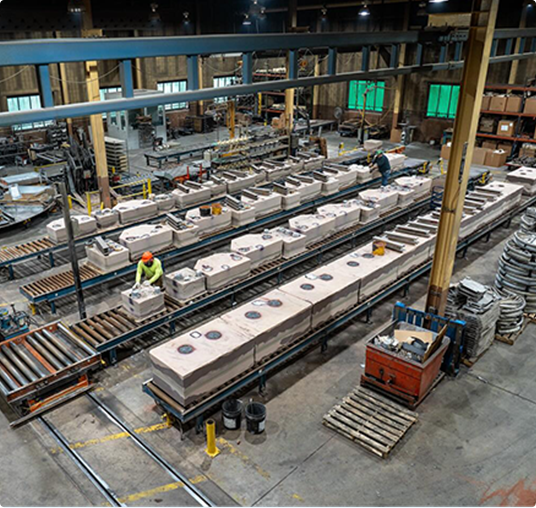
Revolutionizing the casting landscape, progressed molding techniques in Aluminum shops provide impressive layout flexibility that satisfies the varied requirements of contemporary manufacturing. Methods such as 3D printing and accuracy die casting permit elaborate layouts and complex geometries that were formerly unattainable. These technologies allow producers to develop lighter, stronger components, improving product efficiency while reducing product waste. Additionally, innovations in molding materials and procedures contribute to boosted surface area coatings and dimensional precision, which are important for top quality final product. The ability to rapidly model and iterate styles further shortens manufacturing cycles, empowering markets to adjust rapidly to market needs. Overall, these sophisticated approaches are crucial in driving effectiveness and innovation within the Aluminum casting market.Customizable Style Alternatives
Secret Applications of Aluminum Foundry in the Automotive Market
Although the vehicle market has long counted on standard materials, the combination of Aluminum Foundry processes has actually substantially improved car design and efficiency. Aluminum Foundry applications are essential in the production of critical automobile elements, such as engine blocks, transmission housings, and Aluminum Foundry wheels. These components gain from Aluminum's lightweight residential or commercial properties, which contribute to enhanced fuel performance and minimized emissions.Additionally, Aluminum spreadings permit elaborate designs that boost the rules of aerodynamics and overall vehicle aesthetic appeals. The material's strength-to-weight proportion is beneficial in safety-critical components, making sure toughness without jeopardizing performance. The rust resistance of Aluminum expands the life expectancy of automotive elements, reducing upkeep prices for makers and customers alike.
As vehicle manufacturers progressively focus on sustainability, Aluminum's recyclability even more lines up with environmentally friendly campaigns. As a result, Aluminum Foundry procedures are not just transforming automobile production but additionally promoting development in the automotive sector.
Aerospace Advancements Driven by Aluminum Foundry Techniques
As developments in aerospace modern technology continue to progress, Aluminum Foundry techniques play an essential function in improving the performance and performance of airplane. The lightweight nature of Aluminum, integrated with its stamina and deterioration resistance, makes it an ideal material for various aerospace elements, including fuselages, wings, and engine parts. Aluminum Foundry procedures, such as die spreading and sand spreading, make it possible for manufacturers to produce elaborate styles that satisfy rigorous safety and performance standards.Additionally, these techniques allow for rapid prototyping and reduced lead times, which is important in the competitive aerospace industry. The ability to recycle Aluminum also aligns with sustainability goals, minimizing environmental impact. Recurring advancements in Aluminum alloys are improving mechanical homes, even more expanding their application in aerospace. On the whole, Aluminum Foundry techniques substantially add to the advancement of advanced airplane, supporting the industry's search of higher effectiveness and reduced functional expenses.
Future Trends and Technologies in Aluminum Foundry
Technologies in Aluminum Foundry innovation are positioned to improve the industry, driving performance and sustainability. Emerging fads include the assimilation of automation and robotics, which improve accuracy and decrease labor expenses. Advanced spreading techniques, such as 3D printing, offer unprecedented design versatility and fast prototyping abilities, enabling for the development of intricate geometries that were previously unattainable.
Additionally, the adoption of recycling innovations is acquiring grip, enabling shops to reclaim Aluminum scrap and lessen waste. This shift not just sustains environmental efforts yet also reduces basic material expenses. In addition, the implementation of wise production principles, incorporating IoT and information analytics, promotes real-time monitoring and quality assurance, guaranteeing suitable manufacturing processes.
Regularly Asked Inquiries
Just How Does Aluminum Foundry Compare to Various Other Steel Foundry Processes?
Aluminum Foundry procedures usually offer superior lightweight properties, corrosion resistance, and thermal conductivity compared to other metal foundries. These advantages make Aluminum a recommended choice for numerous industries, enhancing efficiency and product performance considerably.What Are the Security Considerations in Aluminum Foundry Workflow?
Safety considerations in Aluminum Foundry operations include correct air flow, safety equipment for employees, fire prevention steps, and dealing with molten metal with care to prevent burns. Regular safety training and adherence to methods are crucial for decreasing threats.Can Aluminum Foundries Accommodate Custom-made Styles for Small Manufacturing Runs?
Aluminum factories can undoubtedly suit personalized styles for small manufacturing runs. This versatility allows customers to develop one-of-a-kind parts, making sure tailored solutions that fulfill certain needs while maintaining performance and cost-effectiveness in the production procedure.What Qualifications Are Very Important for Aluminum Foundry Companies?
The importance of accreditations for Aluminum Foundry firms consists of ISO 9001 for quality monitoring, AS9100 for aerospace applications, and IATF 16949 for automobile standards, making sure adherence, dependability, and conformity to industry-specific requirements and consumer expectations.Exactly How Can Businesses Discover Dependable Aluminum Foundry Distributors?
To find trusted Aluminum Foundry providers, organizations ought to carry out comprehensive research study, seek referrals, review accreditations, analyze previous projects, and compare quotes to ensure top quality, integrity, and ability to satisfy certain making demands successfully.Reusing Aluminum conserves approximately 95% of the energy required to create new Aluminum from ore. Changing the spreading landscape, advanced molding methods in Aluminum foundries provide exceptional design flexibility that meets the diverse requirements of modern-day production. The improvements in molding strategies have actually led the method for adjustable layout choices in Aluminum factories. The vehicle market has long relied on traditional materials, the combination of Aluminum Foundry procedures has actually substantially improved vehicle style and performance - Aluminum Foundry. Aluminum Foundry procedures generally provide superior light-weight residential properties, corrosion resistance, and thermal conductivity contrasted to other metal factories
Report this wiki page